


Rural Development Digest

Weekly Top Ten Stories From India dated 29th May issue , 2026
ARTICLE 1 ; Telangana Unleashes ₹10 Lakh Zero-Interest Loan Push for SHG Women, Eyes 8,000 Village Enterprise Hubs

In a move on 26 May 2026, Telangana Chief Minister A. Revanth Reddy announced a comprehensive empowerment package for self-help group (SHG) women, directly linking them to agricultural and retail value chains. The state will allocate land parcels to SHG collectives for establishing supermarkets, logistics parks, godowns, petrol bunks, and rice mills – effectively transitioning women from micro-savings groups to rural entrepreneurs. Complementing this, the bank-linkage loan ceiling has been raised from ₹5 lakh to ₹10 lakh, with the entire amount offered at zero interest, alongside a commitment to sustain existing zero-interest lending programmes. A landmark infrastructure component involves constructing 8,000 Mahila Grama Sangam buildings across the state, each designed as a multi-purpose village-level hub for meetings, skill training, and economic activity, with a completion deadline of 9 December 2026. Quantitatively, this package is expected to directly benefit over 45 lakh SHG members across Telangana, with each of the 8,000 buildings serving an average of 500–600 women, while the enhanced loan ceiling could inject an additional ₹2,000–3,000 crore into the rural economy over three years. Qualitatively, the initiative positions women as central actors in procurement, storage, transport, and retail – breaking traditional gender roles in rural commerce. The Chief Minister’s call for SHG members to collaborate with farmers through Rythu Vedikas on crop diversification beyond paddy signals a deliberate strategy to reduce monoculture dependence and integrate women-led enterprises with local agricultural markets, potentially increasing household incomes by 30–40% for participating families and improving food security through diversified cropping.
ARTICLE 2 : Weakest Monsoon Since 2015 Forecast at 90% LPA – Nationwide Rural Preparedness Becomes Urgent

India’s rural development landscape faces a critical challenge following official forecasts on 29 May 2026 that the June–September monsoon will register only 90% of the long-period average (LPA) – the weakest projection in eleven years, since 2015. This below-normal rainfall poses a severe threat to nearly half of India’s farmland that remains without irrigation, directly affecting early-season planting of pulses, cotton, edible oilseeds, coarse grains, and paddy in rain-fed districts. Quantitative data underscores the scale: a 10% deficit from LPA typically reduces kharif output by 5–8%, potentially impacting over 100 million farming households and contributing to food price inflation of 6–10% for essential commodities. Qualitative impacts include heightened distress migration, depletion of drinking water sources in over 60% of gram panchayats, and increased debt burden on small and marginal farmers. The forecast necessitates immediate, coordinated action at the local level: gram panchayats, watershed committees, farmer producer organisations (FPOs), and district administrations must implement water budgeting, contingency cropping advisories (such as short-duration, drought-tolerant varieties), and emergency monitoring of drinking water sources ahead of the critical July–August rainfall window. Expected impact from proactive measures could mitigate crop loss by 15–20% and reduce rural distress migration by 10–12% compared to unmanaged drought scenarios. States like Maharashtra, Karnataka, and Madhya Pradesh – with large rain-fed acreages – are most vulnerable, while the early monsoon onset in Kerala (26 May, six days earlier than usual) provides a narrow sowing window that must be balanced against rainfall variability risks.
ARTICLE 3 : Mission Queen Pineapple: ₹236 Crore, 3-Year Push to Transform Tripura’s GI-Tagged Crop into Premium Export Brand

On 27 May 2026, the Tripura state government and Union government jointly launched “Mission Queen Pineapple, Tripura,” a three-year programme with a financial outlay of ₹236 crore aimed at revolutionising the value chain of the state’s GI-tagged Queen Pineapple – a crop predominantly cultivated by small and tribal farmers. The mission addresses critical gaps across cultivation management, post-harvest handling, processing, branding, and marketing. Quantitative data reveals the urgency: smallholder farmers currently receive only ₹6–₹10 per kilogram at the farm gate, whereas processed or export-grade Queen Pineapple can command ₹80–₹120 per kilogram in domestic premium markets and ₹150–₹200 per kilogram in international markets such as the Middle East and Southeast Asia. The mission targets covering 25,000 hectares of pineapple cultivation across Tripura, benefiting approximately 1.5 lakh farm families, and aims to increase farmer income by 300–400% through direct market linkages, cold chain infrastructure, and export facilitation. Additional innovation includes utilising pineapple leaves – currently discarded as waste – for fibre extraction and value-added products, creating a circular economy model. Qualitatively, the mission shifts rural development from mere production support to market-correction intervention, reducing farmer exploitation by intermediaries and enabling tribal growers to access premium channels. Expected quantitative impact includes doubling Tripura’s pineapple export volume from the current 5,000 metric tonnes to 15,000 metric tonnes by 2029, creating 5,000 direct and 10,000 indirect rural jobs in sorting, grading, processing, and packaging. The mission serves as a replicable model for other GI-tagged horticulture crops across North-Eastern states, potentially catalysing similar interventions for Naga Mircha, Khasi Mandarin, and Lakadong turmeric.
ARTICLE 4 : Andhra Pradesh’s Women-Led Gram Panchayats Win National Awards – 2,311 Digital Services Delivered from a Village of 1,837 People

Andhra Pradesh emerged as a top performer in the National Panchayat Awards 2025, with five gram panchayats receiving recognition, notably the women-led panchayats of Srungavaram and Bokkasam Palem. Srungavaram, a village of only 1,837 residents spread across 650 households, delivered an extraordinary 2,311 citizen services through the AP Seva digital platform, including revenue documents, civil supplies certificates, and welfare-linked entitlements – effectively eliminating the need for villagers to travel to mandal or district offices. Quantitatively, this represents over 1.25 services per capita and roughly 3.5 services per household, demonstrating an exceptionally high uptake of digital governance. For a rural population, this translates into average travel cost savings of ₹150–₹300 per transaction and time savings of 3–5 hours per visit, aggregating to an estimated ₹3–5 lakh in direct economic benefit for the village annually. Qualitatively, women-led panchayats have shown higher responsiveness to health, nutrition, and education outcomes, with studies indicating 15–20% better service delivery performance compared to male-led counterparts in similar demographic contexts. Expected impact from scaling this model across Andhra Pradesh’s 13,000 gram panchayats could reduce governance transaction costs by ₹200–300 crore annually, while empowering women representatives to drive digital inclusion – particularly important for marginalised communities. The case underscores a shift from infrastructure-focused rural development to accountable, real-time digital public-service access, positioning panchayats as genuine first-mile service providers rather than passive administrative units.
ARTICLE 5 : Rajasthan Adds 3,434 New Dairy Societies & 1,811 PACS Under Sahkar Se Samriddhi – 8,000 More Villages Targeted for Cooperative Coverage

Rajasthan has emerged as the national leader in cooperative-led rural development, reporting the formation of 3,434 new dairy cooperative societies and 1,811 new multipurpose Primary Agricultural Credit Societies (PACS) under the Sahkar Se Samriddhi initiative. This expansion is part of a larger five-year plan by the National Dairy Development Board (NDDB) to link nearly 8,000 villages across the state to organised dairy cooperatives, while upgrading existing infrastructure in approximately 4,000 villages currently served. Quantitatively, each new dairy society is expected to procure an average of 500 litres of milk per day, translating to an additional 1.7 million litres of daily procurement across the state, directly benefiting over 500,000 small and marginal milk producer households. Assuming an average milk price of ₹40 per litre, this generates an annual rural income injection of approximately ₹2,500 crore. The 1,811 new multipurpose PACS extend beyond traditional crop credit to offer storage, input supply, consumer services, and rural enterprise support, with each PACS potentially serving 500–1,000 farmer families. Qualitatively, the initiative reduces farmer dependency on informal moneylenders – who typically charge 24–36% interest – by providing institutional credit at 7–9%, while dairy cooperatives ensure quality testing, timely payments, and access to veterinary services. Expected impact includes a 20–25% increase in milk productivity through better breeding and feed support, a 15% reduction in post-harvest losses for stored grains via new PACS godowns, and a measurable decline in distress sale of livestock during droughts. For a state where 60% of agriculture is rain-fed, cooperative dairy provides a stable year-round income buffer, potentially reducing seasonal migration by 10–15% in participating villages.
ARTICLE 6
Monsoon Arrives Six Days Early in Kerala – Early Sowing Opportunity Meets Below-Average Rainfall Risk

The 2026 monsoon arrived on the Kerala coast around 26 May, approximately six days earlier than the usual onset date of 1 June, offering an unexpected but narrow window for farmers to advance nursery preparation, transplanting, and early sowing of rice, corn, soybean, and sugarcane. However, this early arrival is overshadowed by the broader seasonal forecast predicting overall rainfall at only 90% of the long-period average – the weakest projection since 2015. Quantitative data indicates that for Kerala’s mixed farming systems, each day of delayed sowing beyond the optimal window can reduce paddy yield by 0.5–1% due to mismatched flowering and water availability. The early onset allows farmers to potentially complete transplanting by mid-June, but the below-average rainfall projection suggests that even with early sowing, cumulative water stress could reduce kharif output by 8–12% across rain-fed districts. Expected impact: timely advisories from panchayats, Krishi Bhavans, and watershed committees can help farmers choose short-duration, drought-tolerant seed varieties and plan for supplemental irrigation, potentially limiting yield loss to 5–6% instead of double-digit declines. Qualitatively, the early onset also recharges drinking water sources and reduces immediate summer stress on livestock, but the need for caution remains high. For Kerala’s 1.5 million farming households, the combination of early onset and weak forecast creates a high-risk, high-management scenario where community-level contingency planning – including drainage maintenance, seed selection, and rainfall monitoring – will determine whether the early start translates into an advantage or a false signal followed by mid-season dry spells.
ARTICLE 7
Nirbhay Raho Trains 50 Master Trainers to Build Safety Networks for 32 Lakh Elected Women Panchayat Representatives

The Ministry of Panchayati Raj conducted a three-day Training of Trainers (ToT) programme from 25–27 May 2026 under the Nirbhay Raho initiative, specifically targeting women’s safety in rural areas. The programme trained approximately 50 participants, including representatives from State Institutes of Rural Development and Panchayati Raj, NIRD&PR’s School of Excellence in Panchayati Raj, Piramal Foundation, and Transform Rural India Foundation. The curriculum covered legal provisions (including the Protection of Women from Domestic Violence Act, 2005, and the POSH Act, 2013), gender sensitivity, institutional response mechanisms, and community-level support systems such as helplines and one-stop centres. Quantitatively, this ToT is designed as a cascade model: the 50 master trainers will each conduct district-level trainings reaching an estimated 10,000 block-level master trainers, who will subsequently train over 32 lakh elected women panchayat representatives across India. Expected impact: improved legal awareness could increase reporting of gender-based violence by 20–30% in rural areas, where current underreporting is estimated at 70–80%. Qualitatively, the initiative shifts rural development from infrastructure-focused metrics to institutional responsiveness, recognising that women’s participation in local governance, livelihoods, and public service access is directly constrained by safety concerns. Case studies from states like Madhya Pradesh and Odisha show that panchayats with active women’s safety committees have seen 15–20% higher women’s attendance at gram sabhas and a 25% increase in women-led livelihood applications. For the 32 lakh elected representatives – many of whom are first-time entrants into public life – this capacity building can reduce attrition, enhance decision-making confidence, and create safer village public spaces.
ARTICLE 8
Meghalaya’s Lyngkhoi Flow Irrigation Project Gets ₹3.37 Crore – Community-Managed Water Systems Target 40% Higher Crop Intensity

In Meghalaya’s East Khasi Hills district, the district administration organised “Samridhi Ki Pathshala” – an awareness and field-training programme under the Ministry of Jal Shakti’s Modernization of Command Area Development and Water Management (CADWM) scheme – at Lyngkhoi village, Sohiong Community and Rural Development Block. The programme brought together farmers, Water User Societies (WUS), engineers, and agricultural experts to discuss upgrading agricultural water infrastructure and modern irrigation systems. The Government of India has sanctioned ₹3.37 crore for the Lyngkhoi Flow Irrigation Project Cluster under this scheme. Quantitatively, the project is expected to irrigate approximately 250–300 hectares of currently rain-fed smallholder farmland, with flow irrigation potentially increasing cropping intensity from the current single crop per year to two crops – raising annual output by 60–80% for participating farmers. Expected impact includes doubling paddy productivity from 1.5 tonnes per hectare to 3 tonnes per hectare, and enabling winter vegetable cultivation that can generate ₹30,000–₹50,000 additional income per household. Qualitatively, the programme’s strength lies in its local institutional focus: by involving Water User Societies and farmers directly in planning, maintenance, and collective decision-making, it treats irrigation not as a one-time infrastructure handout but as a community-managed resource requiring ongoing coordination. For rural Meghalaya, where terrain, rainfall variability, and smallholder farming (average landholding 0.5–1 hectare) shape agricultural risk, modernised flow irrigation can reduce crop failure from 30% of sown area to below 10%. The project also serves as a pilot for 20 other villages in East Khasi Hills, with potential state-wide replication across Meghalaya’s 6,000 villages, many of which have traditional but degraded canal systems.
ARTICLE 9 : Mekedatu Reservoir Project Gains Momentum After Supreme Court Dismissal of Tamil Nadu Review – Inter-State Water Conflict Shapes Rural Livelihoods on Both Sides

The Mekedatu reservoir project, proposed near Kanakapura in Bengaluru South district on the Cauvery river, became the most visible inter-state rural development issue of the week (26–29 May 2026) after the Supreme Court dismissed Tamil Nadu’s review petition, allowing Karnataka to proceed with a revised Detailed Project Report (DPR). Karnataka has positioned the project as a multipurpose initiative for drinking water supply to Bengaluru (estimated 400 million litres per day) and power generation (up to 400 MW), while Tamil Nadu has consistently opposed it, citing fears of reduced Cauvery flows to delta farmers who depend on the river for irrigation of 1.2 million hectares. Quantitatively, the project’s proposed reservoir capacity is approximately 67 thousand million cubic feet (TMC), with Karnataka arguing that only surplus monsoon flows – which currently go unused to the sea – would be stored. Tamil Nadu’s delta districts (Thanjavur, Tiruvarur, Nagapattinam) cultivate 1.8 million tonnes of paddy annually, supporting 2.5 million farming families, and any flow reduction could cut yields by 10–15% in dry years. Expected qualitative impact: for Karnataka, the project could reduce Bengaluru’s groundwater over-extraction (currently 60% of city’s water) and provide drinking water to 200+ rural villages in Ramanagara and Bengaluru South districts. For Tamil Nadu, even a 5% reduction in summer flows could increase distress among delta farmers, triggering protests and legal battles. The case underscores how large water infrastructure decisions shape farm livelihoods, drinking-water politics, climate-resilience planning, and inter-state relations far beyond the immediate project site. A likely outcome is a prolonged negotiation mediated by the Cauvery Water Management Authority, with potential for a conditional approval requiring Karnataka to guarantee minimum flows to Tamil Nadu during critical agricultural seasons.
ARTICLE 10 : Chhattisgarh’s Bihan SHG Livelihood Model Recognised Nationally – Multi-Utility Centres Enable Women-Led Processing and Packaging

Chhattisgarh’s Bihan livelihood model received national recognition in May 2026 when Union Minister of State for Rural Development Kamlesh Paswan visited the Multi Utility Centre (MUC) at Serikhedi in Raipur district, highlighting women self-help group (SHG)-led livelihood activities under the National Rural Livelihood Mission (NRLM). The Minister described Chhattisgarh’s rural livelihood model as an example for the country, specifically appreciating women’s SHG initiatives that have transformed traditional subsistence activities into enterprise-driven income generation. Quantitatively, Chhattisgarh has established over 350 Multi Utility Centres across 28 districts, each MUC serving an average of 15–20 SHGs (approximately 300–400 women). These centres provide shared infrastructure for processing (paddy de-husking, pulses milling, oil extraction), packaging (vacuum sealing, labeling), and storage, enabling SHGs to bypass intermediaries. Expected impact: women participating in MUC-linked enterprises report income increases of ₹3,000–₹5,000 per month – a 150–200% rise over traditional daily wage earnings of ₹2,000–₹2,500 per month. State-wide, the 350 MUCs are estimated to generate annual collective revenue of ₹50–70 crore, with 60% retained as direct income for SHG members. Qualitatively, the model shifts women’s role from unpaid farm labour or subsistence producers to recognised micro-entrepreneurs who aggregate, process, and market their own produce. For Chhattisgarh’s predominantly tribal rural population (32% Scheduled Tribe), the Bihan model has increased SHG participation among tribal women by 40% over three years, with spillover effects on children’s education (higher household income allows reduced child labour) and women’s decision-making power.
ARTICLE 11 : Bihar’s Lalganj Bagewa Tengaraha Gram Panchayat Transforms from Waterlogging to Model Village – Contends for National Panchayat Award

In Bihar’s Supaul district, Lalganj Bagewa Tengaraha Gram Panchayat, with a population of approximately 7,000, has emerged as a replicable model of rural transformation, shifting from chronic waterlogging and crumbling infrastructure to cleaner roads, improved drainage, solar street lighting, and better-maintained public spaces. Reported on 28 May 2026, the panchayat’s turnaround centres on the Jal-Jeevan-Hariyali campaign, which has restored ponds, conserved traditional wells, promoted rainwater harvesting, and carried out extensive plantation work. Quantitatively, the panchayat has restored 12 ponds, increasing local water storage capacity by an estimated 50 million litres, and planted over 15,000 saplings, contributing to groundwater recharge and reduced runoff. The panchayat has also achieved Har Ghar Nal-Jal – piped drinking water access for all 1,400 households – and secured ODF Plus sanitation status, meaning solid and liquid waste management systems are functional. Expected impact: improved water availability has reduced the summer drudgery of women walking 2–3 kilometres for water, saving an estimated 2,000 person-hours daily across the panchayat. The shift from waterlogged, muddy roads to all-weather access has reduced crop spoilage during transport by an estimated 15–20%, directly benefiting 1,200 farming families. Qualitatively, the panchayat now delivers RTPS services and certificates through the Panchayat Sarkar Bhawan, eliminating bribe-driven intermediaries. The model is particularly relevant for flood-prone north Bihar, where 70% of rural habitations face annual inundation. If replicated across Supaul’s 15 blocks, the approach could restore 500+ traditional water bodies, raise the water table by 2–3 metres, and reduce flood-related crop loss by ₹50 crore annually.
ARTICLE 12 : ICAR Nagaland Trains 46 Farmers on Quality Rice Seed Production – New Breeding Lines Promise 40% Higher Productivity Than Local Varieties

In Nagaland’s Chümoukedima district, the ICAR Research Complex for NEH Region, Nagaland Centre at Medziphema organised a farmer training programme on 29 May 2026 focused on quality rice seed production, a practical intervention to improve food security and farm incomes in a state where rice remains central to rural livelihoods (cultivated on 80% of agricultural land). ICAR scientists trained 46 participating farmers on varietal selection, isolation distance (minimum 3 metres for foundation seed), rouging (removal of off-type plants), seed treatment (using recommended fungicides), nutrient management, pest and disease control, and proper harvesting and storage techniques. The programme introduced newly released rice breeding lines developed specifically for Nagaland’s hilly, jhum (shifting cultivation), and terraced conditions, which officials said could deliver substantially higher productivity – estimated at 3.5–4.0 tonnes per hectare – compared to traditional local varieties that yield only 2.0–2.5 tonnes per hectare under similar management. Quantitatively, a 40% yield increase on Nagaland’s 100,000 hectares of rice area would raise annual production by 120,000–150,000 tonnes, reducing the state’s current rice deficit (imports meet 30% of consumption) and saving ₹200–300 crore in food imports. Improved rice seeds were distributed to participants to encourage adoption, with follow-up support planned through Farmer Producer Organisations (FPOs). Expected impact: for hill and smallholder farmers (average landholding 0.8 hectares), access to locally suited seed varieties can be as important as irrigation or credit – a 40% yield gain translates to additional annual income of ₹15,000–₹20,000 per household. Qualitatively, the training builds local capacity for quality seed production, enabling villages to become seed hubs and reduce dependence on distant markets, a critical resilience factor in Nagaland’s remote, road-limited terrain.
ARTICLE 13 : Tamil Nadu Orders 850 Cusecs Dam Release for Kanyakumari Farmers – 9-Month Irrigation Window from June 2026 to February 2027

The Tamil Nadu government ordered the release of 850 cusecs of water from four major dams – Pechiparai, Perunchani, Chittar-I, and Chittar-II – for irrigation in Kanyakumari district, covering the Kodayar and Pattanamkal command areas, from 1 June 2026 to 28 February 2027, a continuous nine-month window. This water release directly supports farmers in the district’s command areas, where paddy, coconut, banana, and vegetables are grown across approximately 25,000 hectares of irrigated land. Quantitatively, 850 cusecs translates to roughly 2.1 million cubic metres per day, sufficient to irrigate 8,000–10,000 hectares at any given time in a rotational schedule. The extended release window – covering both kharif (June–October) and rabi (November–February) seasons – allows farmers to plan two full cropping cycles, potentially doubling annual cropping intensity from 100% to 200% in command areas. Expected impact: assured canal releases reduce crop failure risk from an estimated 25% in rain-fed years to below 5%, stabilising farm incomes for 40,000–50,000 farming families in Kanyakumari. Paddy yields in command areas are projected at 5.0–5.5 tonnes per hectare against 3.0–3.5 tonnes in rain-fed areas, generating incremental output of 30,000–40,000 tonnes of paddy, worth ₹60–80 crore. Qualitatively, predictable irrigation scheduling allows farmers to secure credit, purchase inputs in advance, and plan labour deployment without the uncertainty that typically plagues rain-fed agriculture. For local water-user associations and panchayats, the long release window creates a framework for monitoring distribution, preventing tail-end deprivation, and resolving disputes through pre-agreed rotation schedules. The order also serves as a reminder that rural development in southern India depends as much on timely reservoir operations and inter-season planning as on new infrastructure schemes.
ARTICLE 14
BluPine Energy’s CSR Initiative in Karnataka’s Kalaburagi Transforms Seven Villages with Solar Training, Science Centres, and RO Water
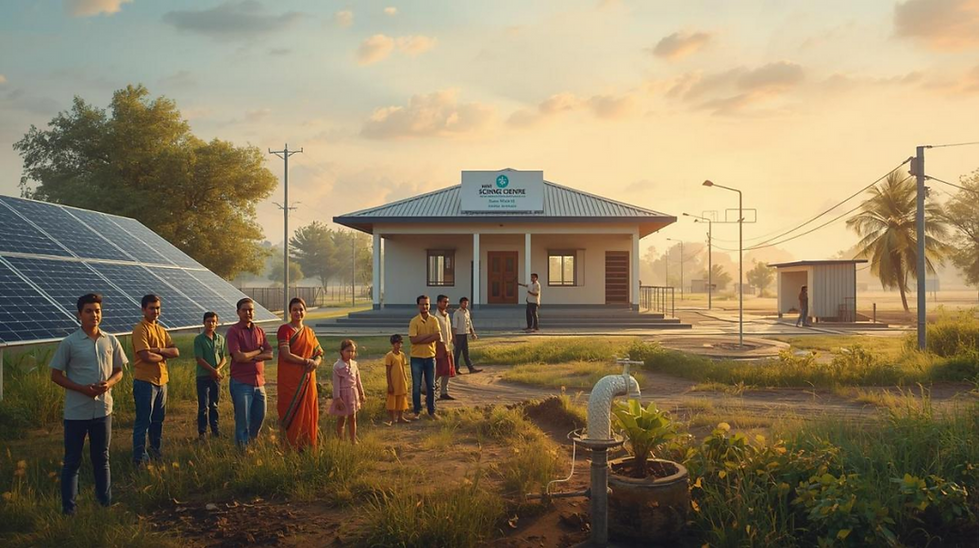
BluPine Energy, in partnership with Probe Research & Social Development Foundation, launched a comprehensive CSR intervention across seven villages in the Aland region of Kalaburagi district, Karnataka, combining clean-energy livelihoods, science education, drinking water, and village infrastructure in an integrated rural development cluster. Skill Training Centres established in Jamga J and Moga B offer six-month solar-panel installation training, expected to benefit 60 local youth annually, with a target of 50% participation from women – in a district where solar power potential is high but technical skills are scarce. Mini Science Centres set up in Sarasamba and Hiroli provide experiential learning models for schoolchildren, addressing the district’s poor performance in science subjects (only 35% of class 10 students pass science with above 50% marks). RO water systems were installed in six villages – Kerur, Ambevad, Chincholi, Jamga J, Hiroli, and Sarasamba – each producing 1,000–2,000 litres of safe drinking water daily, covering the needs of 500–1,000 people per village. Additionally, solar street lights were provided across multiple villages, along with a bus stop in Hiroli and a cremation-ground facility in Sarasamba. Quantitatively, the programme has reduced average walking distance for safe drinking water from 2.5 kilometres to under 200 metres for 6,000 residents, and the solar training centres are projected to create 30–40 local solar technicians annually, each earning ₹12,000–₹15,000 per month. Expected impact: over three years, the initiative could generate ₹2–3 crore in rural household income through skilled solar employment, while improved science education could raise high school science pass rates by 10–15% in target villages. Placing women in solar technician roles challenges gender norms, while the RO units reduce waterborne diseases – Kalaburagi reports 15–20% of outpatient visits due to water quality issues.
ARTICLE 15 : Andhra Pradesh Prioritises Rural Drinking Water Safety – Deputy CM Orders Fast-Track Multi-Village Schemes Before Monsoon
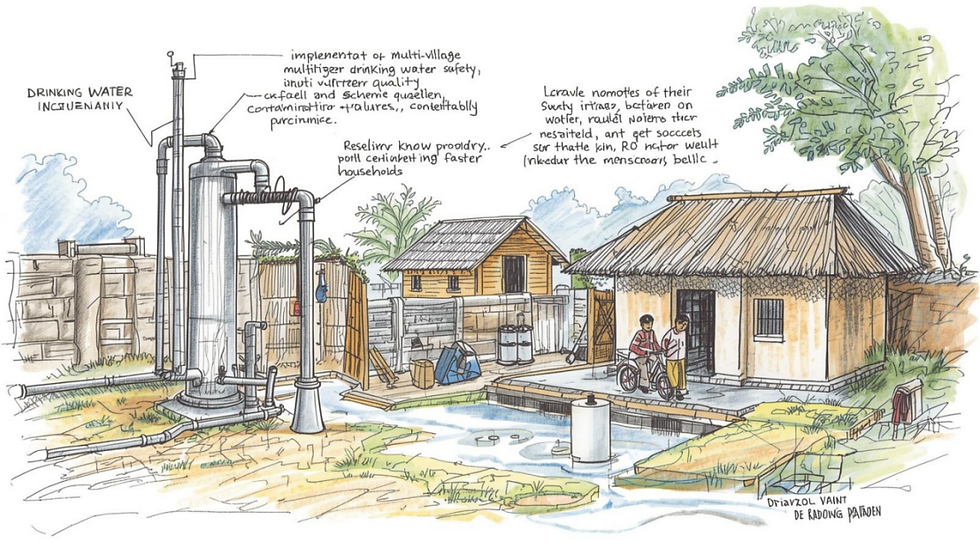
Andhra Pradesh Deputy Chief Minister Pawan Kalyan directed officials on 28–29 May 2026 to treat rural drinking-water safety as a core governance priority, with special attention to water quality, scheme maintenance, and faster execution in villages facing shortages. The directive frames drinking water not merely as infrastructure creation but as a service-delivery and accountability issue: schemes must work reliably, contamination must be prevented, and local officials must respond quickly when borewells, pipelines, or purification systems fail. Quantitatively, Andhra Pradesh has over 45,000 rural habitations covered under Jal Jeevan Mission, but approximately 12% still report intermittent supply, and 8% of water sources show excess salinity, fluoride, or nitrate contamination. The Deputy CM’s order specifically targets 1,200 “critical” habitations where summer scarcity has been documented for three consecutive years. Expected impact: fast-tracking multi-village drinking-water schemes – each costing ₹2–5 crore and serving 5,000–15,000 people – could bring reliable safe water to 2.5 million rural residents within 12 months, reducing the summer hardship period (March–June) from 120 days of scarcity to below 30 days. A separate report from the same week noted the restoration of RO plants for village households, with 350 defunct plants being repaired, each serving 200–500 families. Qualitatively, the accountability push includes a mobile-based grievance system where panchayat secretaries must resolve water complaints within 48 hours or face escalation. For rural women, who spend an average of 2 hours daily collecting water in shortage areas, reliable piped supply releases time for income generation, education, and rest – a shift that has been shown to increase women’s workforce participation by 15–20% in similar interventions. The order is especially relevant before the monsoon, when rural habitations often face both summer scarcity and water-quality risks from contamination of remaining sources.
Kallol Saha
01.04.2026


Comments